Showing posts with label Anarchism. Show all posts

Tuesday, September 4, 2012

Running Down the Walls 2012 Carrera para Bajar los Muros 2012

http://la.indymedia.org/news/2012/09/255365.php
by Rockero, photos by Lane Farnham Monday, Sep. 03, 2012 at 5:01 PM 
rockero420@yahoo.com
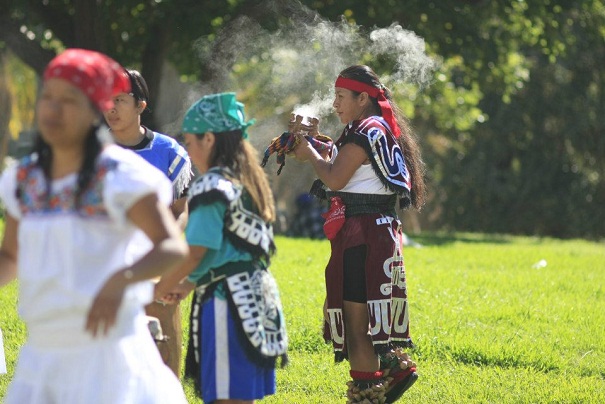
Throughout the US and Canada, chapters of the Anarchist Black Cross Federation held simultaneous runs to raise funds for the needs of political prisoners and prisoners of war, as well as to continue to chip away at the system that massively incarcerates impoverished people and colonized people worldwide. Runs were also held at four prisons. In Los Angeles, the event drew about thirty runners to MacArthur Park. There they joined members of Revolutionary Autonomous Communities who were present for the weekly food program, danzantes from Danza Cuauhtémoc, in attendance to bless the run, and supporters from the radical community throughout Southern California. The over $1000 raised was split between ABC to replenish the warchest and RAC to support its ongoing mutual aid and organizing efforts.

A lo largo de los Estados Unidos y Canadá, comités de la Federación Cruz Negra Anarquista (ABC, por sus siglas en inglés) realizaron carreras simultáneas para recaudar fondos para las necesidades de presxs políticxs, al igual que para seguir derrotando el sistema que encarcela a una escala masiva a gente empobrecida y gente colonizada por todo el mundo. También se efectuaron carreras en cuatro penales. En Los Ángeles, alrededor de treinta partícipes asistieron al evento en el Parque MacArthur. A sus filas se sumaron integrantes de Comunidades Autónomas Revolucionarias (RAC, por sus siglas en inglés), quienes se presentan cada domingo para su programa semanal de repartición de alimentos, danzantes de Danza Cuauhtémoc, quienes llegaron para bendecir el evento, y adherentes de comunidades radicales de todas partes del sur de California. La suma de la recaudación, que superó mil dólares, se dividirá entre ABC para suplir su tesoro y RAC para solvemtar sus esfuerzos organizativos y de asistencia mutua.
There are dozens of political prisoners and prisoners of war currently being held in US prisons.1 The majority of them were active in the liberation struggles, especially the Black liberation struggle, of the 60s and 70s, although some of them have been captured due to their involvement in more recent struggles. Other former prisoners have died in prison from assassination (such as George Jackson and Joseph Waddell), old age, and illness (such as Kuwasi Bulagoon), due in part to the inadequate medical care provided to prisoners, which is aggravated for political prisoners. Some freedom fighters, such as Safiya Bukhari and Ojore Lutalo, have served lengthy sentences and have since been released. (Bukhari has since passed away.) At least one prisoner was freed by her comrades, and now is safe in exile in Cuba (Assata Shakur). It is also important to note that some prisoners, while not originally incarcerated for political activity, become politicized and engage in struggle once on the inside, and often face repurcussions for their political activity.

The Anarchist Black Cross exists to provide support to those who are paying the consequences for revolutionary activity. One of the primary ways that support is provided is financially. Prisoners are detached from any form of self-sufficiency and are unable to meet basic needs, and the ABC helps to fill that gap. ABC also helps provide support to prisoners returning to the struggle on the outside once they have finished their sentences. Finally, ABC promotes awareness of political prisoners and prisoners of war and the need to support them as part of the larger struggle for social justice by publishing and distributing literature.

The Los Angeles chapter of ABC is one of the longest-standing chapters in the country, and in addition to the work around prisoners, has contributed the preservation of historical memory of Los Angeles radicalism through its website and its historical walking tours. (The walking tours are now being carried out under the auspices of the Black Rose Society, which will hold a tour of San Pedro on September 15 that will focus on the history of the IWW in the port and the 1923 general strike.)

Prior to the run, Cuco from the danzas led an indigenous ceremony to ask permission from the four directions, as well as from other cosmic forces, to carry out the events. The ceremony was followed by statements of solidarity received from prisoners, as well as a statement from the Mexico City chapter of ABC.

Here are the statements:

The ABCF Warchest Program helps us. Thank you for attending to our basic financial needs. You don’t talk about it, you be about it. Thus I take great pride in and am comforted by your steadfast support of our political prisoners and POWs.
Your consistency in this regard and your social practice in general – “telling no lies and claiming no easy victories, “ is commendable. You teach by example.
Therefore, I strongly support you and the solidarity run. The race goes not to the swiftest but to those who endure.
Your Brother,
Herman Bell


Solidarity isn’t an abstract idea haphazardly thrown around like craps. Solidarity is a way of consciously living that is explicitly interwoven into an anarchists existence. Such a way of being transcends nation-state borders, prison walls, electric fences, and fascist barricades. Direct action infused in solidarity with us on the inside and you on the outside not only challenges systematic mass incarceration, but it shatters the social relations perpetuated by the prison industrial complex. Although I am behind prison walls in a scorching California desert, I am under the same sky, under the same sun, and am running down the same walls with you in solidarity towards freedom.
Phillip "Nomas" Ruiz
Blythe, California


To All Runners of Los Angeles,
My name is Oso Blanco. I am a powerful warrior; good things are going to come to me- big positive things- so I may be set free from fed prison and return to helping others. Before the universe I say, “Let is be so!” I say to the universe and all of you for RDTW – For we are all related and part of the universe, “Rise Up! Make it happen!” The government holds me hostage because of my inner power and I say reverse this with me. Set us all free.
Love Oso Blanco, EZLN supply line warrior.


My thanks to you all for choosing to participate in an active remembrance of those hidden by the state. in our simplest and smallest acts we can nourish healthy communities and by coming together through intention our reach expands to embrace even those in the belly of the beast who may feel as though they cannot contribute. here's to the removal of the walls which separate us, and those systems which slow their natural pattern in life = to crumble.
Eric McDavid, ELF PP


To ABCLA
To the runners
A short message just to send a greeting from Mexican land. We want this event to be a success and that soon we see all the walls fall down, not just those who are holding many of our comrades in prison, but also those that divide us by borders.
Here in Mexico we have two imprisoned anarchist comrades, but there are thousands of people in prison just because they are poor or indigenous. As ABC we are working for the destruction of these killing centers that prisons are and we are very happy to continue this fight with you.
Falling all the walls!
Solidarity forever!
ABC Cruz Negra Anarquista México


Dear Friends in the LA ABCF
Thanks so much for you letter regarding the planned Running Down the Walls. I got it on July 19th. I was afraid, frankly to say, your notice also evaporated as some of my letters do, incoming as well as outgoing. Therefore, I felt happy to know.
Anyhow, we, in FCI Terre Haute population, have organized a solidarity run with Running Down the Walls on the same day, but time is of choosing, forgive us.
The summer is extremely hot in this area, as you might know. I myself am in good condition since I run a little over 5k daily. Thus, I’m ready for the planned run. I hope your planned run is successful.
In Solidarity,
T. Shirosaki July 22, 2012.


Runners then braved high temperatures to join comrades in Brooklyn, Tucson, Denver, Connecticut River (Massachussets), Berkeley, as well is in the Canadian cities of Guelph (Ontario) and Penticton (British Columbia) in running down the walls. Prisons joining in solidarity runs included USP Terre Haute, USP Tucson, FCI Terminal Island, and USP Big Sandy.

Most participants took three laps around the perimeter of MacArthur Park, which measures approximately three miles. Some cycled, while others walked. Some pushed babies in strollers. As they finished their laps, triumphant runners were cheered by a crowd of spectators. They then ate food and drank water in celebration with other members of the community.

Those interested in freeing all political prisoners were urged to join the Jericho Movement, which will be meeting at the Southern California library on September 15 at 5:PM.

_________________________________

1. The Jericho Movement lists 67 political prisoners on its website. http://www.thejerichomovement.com/prisoners.html The Anarchist Black Cross lists 48. http://www.abcf.net/abcf.asp?page=prisoners\


Actualmente decenas de presxs políticxs y prisionerxs de guerra están recluídos en prisiones estadounidenses.1 En su mayoría, fueron partícipes en las luchas sociales de los 60 y los 70, en particular la lucha por la liberación negra, aunque a algunxs se les capturó debido a su participación en luchas más recientes. Otrxs ex-presxs se han muerto encarcelado, ya sea por asesinato (como en los casos de George Jackson y Joseph Waddell), vejez, y enfermedad (como Kuwasi Bulagoon). Los casos de enfermedad se deben parcialmente a la insuficiencia de cuidado médico en el sistema carcelario, la cual que se agrava para presxs políticxs. Algunxs luchadorxs por la libertad, como Safiya Bukhari y Ojore Lutalo, han salido a la libertad después de largas sentencias. (Bukhari falleció en 2003.) Por lo menos una prisionera fue liberada por sus compañerxs, y ahora vive en la seguridad del destierro en Cuba (Assata Shakur). Cabe destacar que algunxs reos, aunque no encarceladxs por actividad en un principio, se politizan y luchan ya estando adentro, y a menudo enfrentan represalias por su actividad política.

Cruz Negra Anarquista existe para proporcionar apoyo para lxs que están pagando las consecuencias de su actividad revolucionaria. Una de las principales maneras de brindar ese apoyo es monetariamente. A lxs presxs se les despoja cualquier forma de ser autosuficiente y por consecuente, no alcanzan solventar sus necesidades apremiantes. La Cruz Negra ayuda a llenar esa carencia económica. Por último, ABC conscientiza en torno a presxs políticxs y prisionerxs de guerra y sensibiliza acerca de la necesidad de apoyarlxs como parte de la lucha más amplia por la justicia social mediante la publicación y repartición de literatura.

El comité de ABC de Los Ángeles es uno de los comité de más larga trayectoria en el país, y en adición a su trabajo carcelario, ha contribuído a la preservación de la memoria histórica del radicalismo angelino a través de su sitio web y sus caminatas históricas. (Estas caminatas son auspiciadas hoy en día por la Sociedad Rosa Negra, la cual realizará una caminata por San Pedro el 15 de septiembre que enfocará sobre la historia del IWW en el puerto y la huelga general de 1923.)

Antes de la carrera, el danzante Cuco dirigió una ceremonia indígena para pedir permiso para llevar a cabo el evento de los cuatro puntos cardinales, al igual que de las demas fuerzas cósmicas. En seguida de la ceremonia, se leyeron declaraciones de solidaridad de ciertos presos, y también un mensaje del comité defequeño de la Cruz Negra Anarquista.

Las declaraciones fueron las siguientes:

El programa del Tesoro de ABCF nos ayuda. Gracias por atender a nuestras necesidades financieras básicas. Ustedes no hablan de ser solidarios y solidarias, ustedes en verdad lo son. Por ende, me da mucho orgullo y socorro su apoyo consistente de nuestrxs presxs políticxs y prisionerxs de guerra.
Su constancia en este respecto y su práctica de justicia social en general de "no echar mentiras ni tomar el mérito para ninguan victoria fácil" es loable. Enseñan por ejemplo.
Por consecuente, lxs apoyo fuertemente y apoyo su carrera de solidaridad. La persona que perdura, no la que termina primero, es la que gana.
Su hermano,
Herman Bell.


La solidaridad no es una idea abstacta que se avienta al azar como un par de dados, sino una manera de vivir conscientemente que se teje explícitamente con la existencia del o de la anarquista. Tal es una manera de ser que transciende las fronteras del estado-nación, los muros de los penales, las bardas eléctricas, y las barricadas fascistas. La acción directa infundida con solidaridad con nosotrxs que estamos adentro, y ustedes por fuera, no sólamente le pone reto al encarcelamiento masivo, sino que despedaza las relaciones sociales perpetuadas por el complejo industrial penal. Aunque me encuentre detrás de la rejas en un desierto chamuscante de California, estoy bajo el mismo cielo, bajo el mismo sol, y estoy corriendo para aniquilar los mismos muros con ustedes en solidaridad hacia la libertad.
Phillip "Nomas" Ruiz
Blythe, California


A todxs lxs carreristas de Los Ángeles
Mi nombre es Oso Blanco. Soy guerrero poderoso; cosas buenas me queda por delante, cosas grandes y positivas, para que me liberen de la prisión federal y regrese a ayudar al prójimo.
Ante el universo, declaro "¡Que así sea!" Se lo digo al universo y a todxs ustedes para RDTW - porque todxs somos parientes y formamos parte del universo, "¡Levántense! ¡Háganlo realidad!" El gobierno me tiene de rehén por mi poder interior, y yo digo, deshagan esto conmigo. Libertad para todxs.
Amor de Oso Blanco
Guerrero de línea de apoyo material al EZLN.


Mis agradecimientos a todxs ustedes por elegir participar en una membranza activa de lxs que esconde el estado. en nuestros hechos más pequeños y simples podemos nutrir comunidades sanas, y al unirse a través de nuestra intención, se expande nuestro alcance para abrazar incluso a lxs que están en el vientre de la bestia que puedan sentir que no tiene cómo contribuir. un brindis a la quitada de los muros que nos separan, y aquellos sistemas que atrasan su secuencia natural de vida = que se desmoronen.
Eric McDavid, PP del ELF


Para ABCLA
A lxs carreristas
Un mensaje breve nada más para mandar un saluido de tierras mexicanas. Queremos que este evenot sea un éxito y que pronot veamos caer todos los muros, no sólo los que encierran a muchxs de muestrxs compañerxs en la prisión, sino también los que nos dividen por fronteras.
Aquí en México hemos dos camaradas anarquistas presos, pero son miles de gente encarcelada sólo porque son pobres o indígenas. Como ABC estamos trabajando para la destrucción de estos centros de matanza que son las prisiones y estamos contentxs de continuar esta lucha con ustedes.
¡Que se caigan todos los muros!
¡Solidaridad siempre!
ABC Cruz Negra Anarquista México


Queridxs amigxs en la ABCF de LA Tantas gracias por su carta concerniente la planeada Carrera para Bajar los Muros. Me llegó el 19 de julio. Tenía miedo, para decirles francamente, la noticia también evaporó así como algunas de mis cartas, tantas las entrantes como las salientes. Por lo tanto, me sentí contenco de saber.
Bueno, nosotros de la población de FCI Terre Haute, hemos organizado una carrera de solidaridad para el mismo día, pero el tiempo es de [nuestra] elección, perdónennos.
En verano hace un calor estremo en esta área, así como tal vez lo sepan. Por mi cuenta estoy en buenas condiciones ya que corro un poco más de 5k diario. Por eso, estoy listo para la carrera planeada. Espero que su carrera programasa sea exitosa.
En solidaridad,
T. Shirosaki
Julio 22, 2012


Luego lxs carreristas desafiaron las altas temperaturas para unirse con compañerxs de Brooklyn, Tucsón, Denver, Río Connecticut (Massachussets), Berkeley, al igual que en las ciudades canadienses de Penticton (Colombia Británica) y Guelph (Ontario). Reclusorios que participaron en carreras solidarias incluyeron USP Terre Haute, USP Tucsón, FCI Terminal Island, y USO Big Sandy.

La mayoría de lxs participantes dieron tres vueltas al perímetro del parque, lo cual que mide aproximadamente tres millas. Algunxs anduvieron en bicicleta, mientras que otrxs caminaron. Algunxs empujaron carriolas con niñxs. En lo que terminaban sus vueltas, una multitud de espectadores echaron porras a lxs carreristas triunfantes. Luego comieron y bebieron agua con otrxs miembros de la comunidad.

A la gente a la que se le interese liberar a todxs lxs presxs políticxs, se les instó a unirse al Movimiento Jericó, que tendrá reunión el 15 de septiembre a las cinco PM en la Biblioteca del Sur de California.

__________________________

1. El Movimiento Jericó nombra a 67 presxs políticxs en su sitio de internet. http://www.thejerichomovement.com/prisoners.html La Cruz Negra Anarquista maneja una lista de 48. http://www.abcf.net/abcf.asp?page=prisoners

002
002...
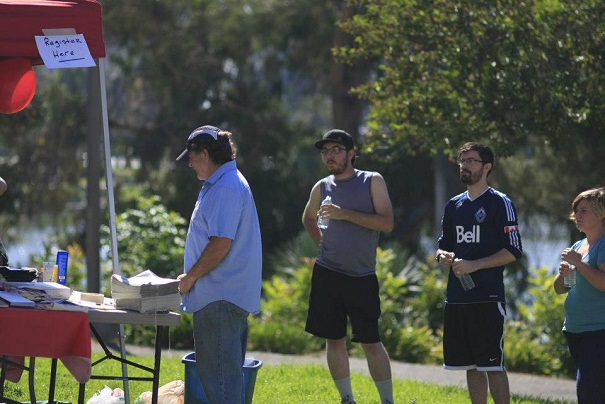
Runners lining up to register

003

003...
Ceremonia

004

004...
Ceremonia

005

005...
Reading statements

006

006...
Reading and interpreting statements

007

007...
Supporter from RAC

008

008...
Literature from ABC table

009

009...
Food from RAC mutual aid program

010

010...
Supporter from RAC
Sunday, December 18, 2011

Occupy the Ports - A Day without Goldman Sachs


http://la.indymedia.org/news/2011/12/250356.php

by Rockero Monday, Dec. 12, 2011 at 10:25 PM 
rockero420@yahoo.com
December 12, 2011
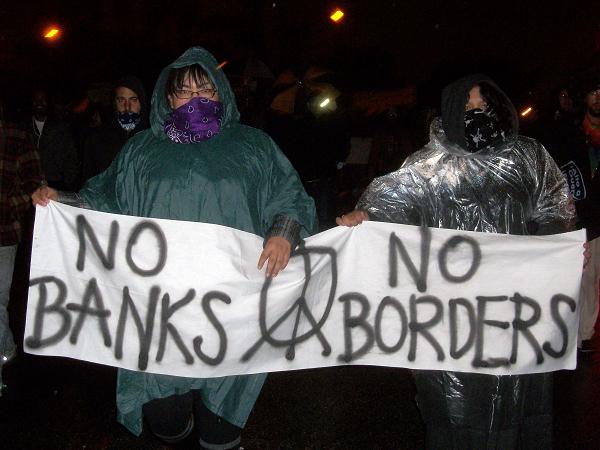
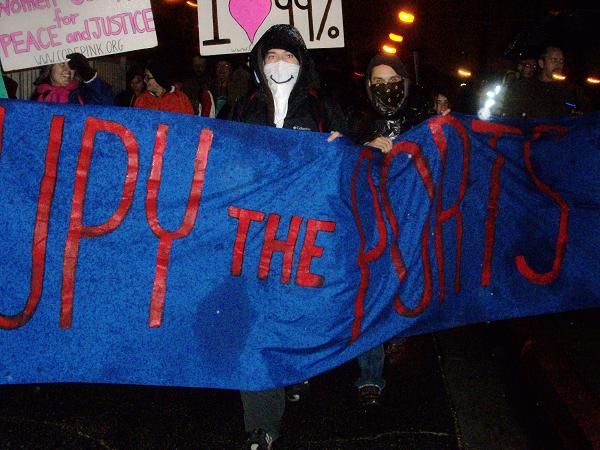
LONG BEACH, California - Heeding the call of Occupy Oakland, who called for a shutdown of west coast ports in response to the brutal eviction of occupy encampments nationwide, and in solidarity with expolited port workers and truckers, about 500 militant occupiers and their friends shut down Terminal J of the Port of Long Beach, the home of SSA Marine, an investment of the criminal enterprise Goldman Sachs and the main stakeholder of the US government.
Occupy the Ports - A...
Occupy Riverside spent better than the past week coordinating our participation, with meetings, tactics trainings, information gathering, food, art, and transportation preparations. We were a bit unnerved by the reports we were hearing from Occupy Long Beach, who told us that the cops were "going to great pains" to accomodate our protest, and that if anyone got arrested, it would be their own fault. We were worried that Long Beach was making deals that we hadn't and wouldn't agree to, essentially setting us in a trap. We were also concerned about the potential for becoming trapped or kettled in on the port's narrow piers.

We decided to arrive early just in case entry was blocked prior to the official five o'clock start time. We gathered at the site of our former encampment at midnight Sunday, shared resources such as bandannas, rain ponchos, and pepper spray antidote, and added final touches on our banners and signs. One soul burned sage, and a few shared sage words of inspiration.

We formed a ten-car caravan that met with comrades from other inland occupys at a Long Beach all-night chain restaurant for coffee and various victuals, and then headed to Harry Bridges Park, the propitiously named park that becase the staging area for our militant labor protest. A large contingent from Occupy Las Vegas had beat us there, and Occupy Pasadena, Occupy Long Beach, was also present. Soon enough, the buses from Occupy LA arrived. There were also large contingents from IWW chapters and other groups such as CodePink and the socialist parties, and some smaller groups from other unions, but the autonomous social body of Occupy was unmistakable as the primary visible force.

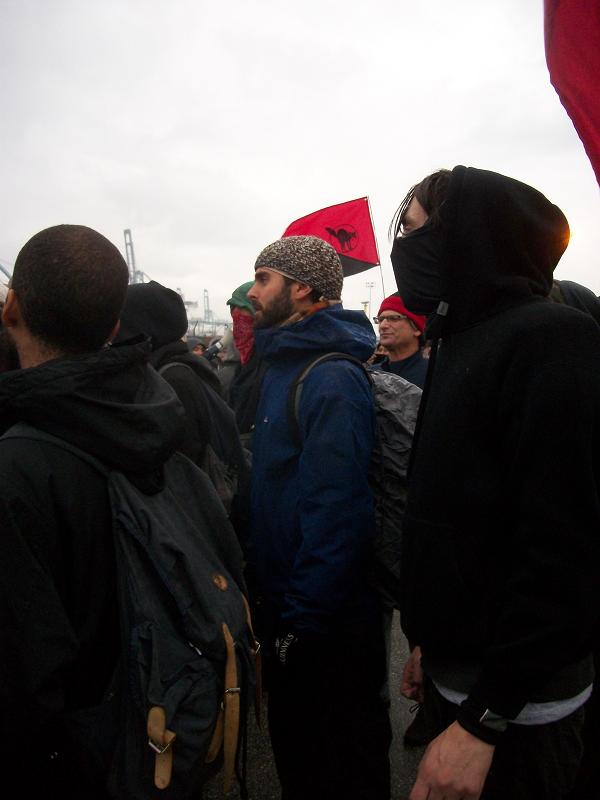
Black flags and syndicalist flags abounded, a many, many comrades wore bandannas over their faces and masks of other sorts, ready to form a black bloc if necessary.

At about 5, Michael Novick arrived and started distributing chant sheets and clarifying the morning's game plan. The corporate media rushed to make last-minute interviews before the 5:30 departure time. The crowd was brimming with energy, and even though the rain fell very steadily.

"Hey hey, Goldman Sachs, we want all our money back!"

"Whose port? Our port!"

"All day! All week! Occupy Long Beach!"

"Banks got bailed out! We got sold out!"

We marched along the waterfront through the park and entered the port.

"Jail them yes! Bail them no! Goldman Sachs has got to go!"

"¡Se ve, se siente! ¡El pueblo está presente!"

"We are the 99%!"

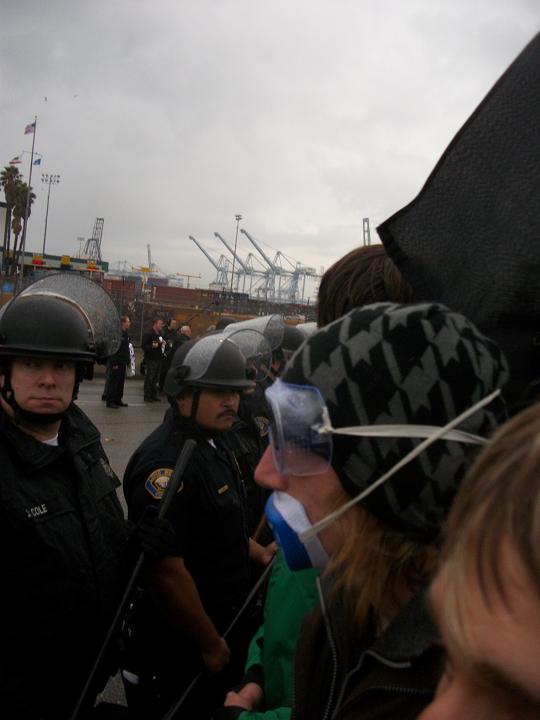
Some of the comrades grabbed a metal barricade from the cops and carried it with them. It was about a forty-minute walk, but eventually we did encounter police repression.

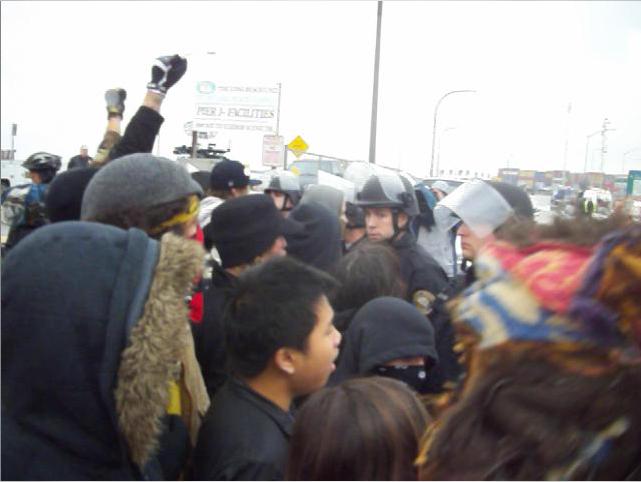
An advance party ignored the police line and continued about a hundered yards toward the dock. Some organizers attempted to convince us not to continue the march, and the crowd seemed pretty hesitant. Shortly the bolder group returned and convinced most of the rest of us to join them. We advanced further, but eventually faced off with another row of cops.

"The people united will never be divided!"

"Occupy Wall Street! Occupy Long Beach! Occupy everywhere! Never give it back!"

"What do we want? Justice! When do we want it? Now!"

It wasn't clear where the truckers were supposed to enter, or where the longshore workers' normal entrance was, so people didn't really know where to best make use of their presence. Shortly, however, we regrouped and resituated ourselves more strategically.

Once we did, the police issued their warning. "This is the Long Beach police department. You are trespassing on private property. You will be subject to arrest unless you move back to the pre-designated protest area." Our fears about OLB's negotiations with the police were confirmed.

The drums beat furiously.

"This is what a police state looks like!"

"One! We are the people! Two! We are united! Three! The occupation is not leaving!"

"Predesignated protest area!" someone mocked into a bullhorn.

We formed a picket, circling in front of the line of cops that was attempting to block us.

"Kick Wall Street off the waterfront!"

"Every where we go, people wanna know who we are! So we tell them: We are the ninety-nine! The mighty ninety-ninety-nine!"

The cops issues another warning ten minutes later. Shortly thereafter they began to shove us back with their clubs.


"We are peaceful! We are non-violent!"

They also attempted to grab members of the crowd on several occasions. Most of the times we were able to retrieve our comrades, but they managed to keep one of our brothers from the inland empire who has been active in Occupy San Bernardino Valley and who played a prominent role in Occupy Ontario's first action.

The drums beat a frenzied cadence.

"Let them go! Let him go! Let her go!"

"Police represent the 1%"

"The whole world is watching!"

At one point, it seemed the cops were attempting to break through our line. About five or six of them burst forth into the center of our line, but we stuck together and they were unable to penetrate us. Luckily, we suspected they would attempt to split us with a maneuver like this, and the anarchists were quick to bring the barricade to the precise spot where it was needed to repel the attack.

"We're ninjas! Don't fuck with us!"

"¡Sí se puede!"

This continued for more than an hour, with the police pushing back a few feet at a time at first, then continuously.


Since we had accomplished our original goal of ending truck traffic and deterring much longshore worker attendance, we decided to fall back. As we did, we practiced some innovative chants.

"Police got the back of Goldman Sachs!"

"Move your feet! Tactical retreat!"

"Emma Goldman not Goldman Sachs!"

"Stay together! We'll fight forever!"

When we reached the intersection nearest to the parking lot, police closed in on both sides. A tent went up and people sat down. The cops threatened to use chemical weapons, painful projectiles, and angry dogs against us. They ordered us to disperse and threatened to arrest anyone who chose to remain. They said they would designate the legal dispersal route but failed to do so until challenged by a protester.

Even as people passed through the parking lot, the police remained in pursuit, in times appearing to want to block of the exit routes of dispersing protesters.

Once the parking lot was mostly clear, however, they refocused their presence at the entrance to the park where the action had begun that morning, giving us a bit of breathing room in the park to regroup. Different groups made plans to meet for food, debriefing, and planning next steps.

This is the most excited I have ever seen any group to take action. We created a feedback loop from our own energy that kept us pumped and motivated all morning long. In evaluative conversations, we shared the feeling of success from having reached a common objective. We prevented 200 trucks from entering the port, and according to a comrade in communication with the ILWU, also deterred about 50 longshore workers from entering as well. We rejoiced in the inspirational power that collective action has, making us eager to escalate tactics to ensure that the proposed May Day General Strike is as effective and powerful as possible.

002

002...
Harry Bridges Park in the tranquility of morning

003

003...
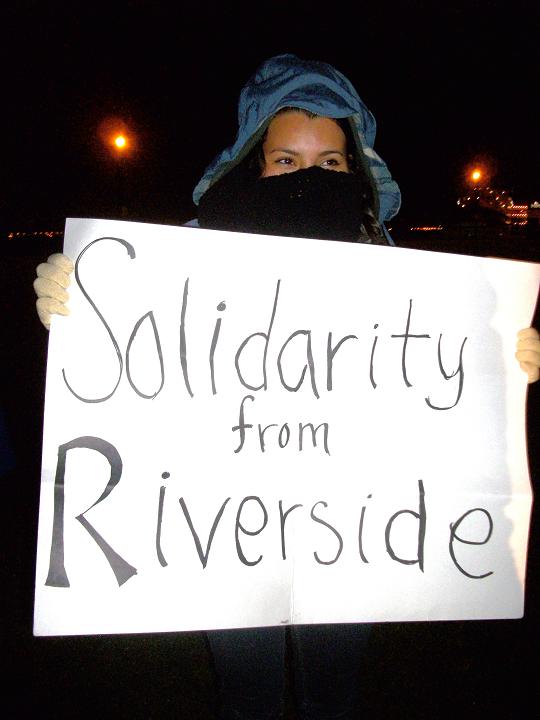
Solidarity from Riverside

004

004...
Occupy the Ports banner

005

005...
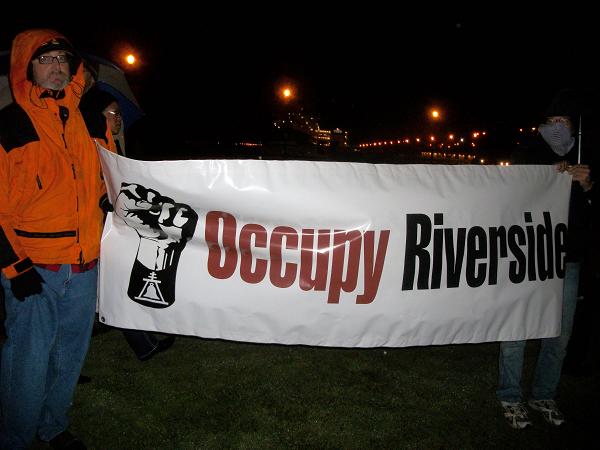
Occupy Riverside banner

006

006...
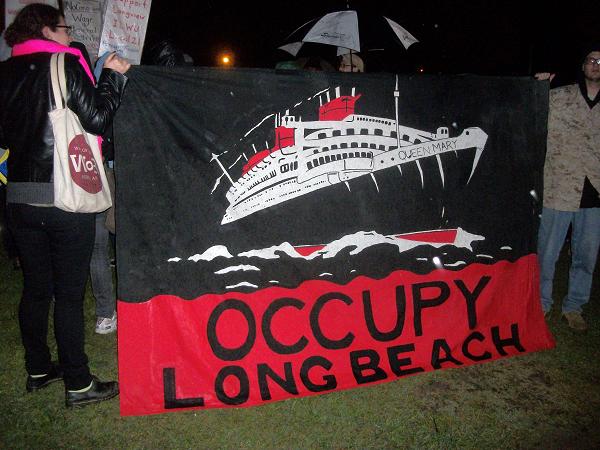
Occupy Long Beach banner

007

007...
No Banks! No Borders!

008

008...
The other "Occupy the Ports" banner

009

009...
Skirmish

010

010...
Shut it down!

011

011...
Singing the US national anthem.

012

012...
The cops even had their boat out.

013

013...
Tactical retreat!

014

014...
At the intersection

015

015...
Tent at intersection

016

016...
Intersection

017

017...
Back at Harry Bridges

Wednesday, October 5, 2011

23 de septiembre--Día de acción

by Rockero Friday, Sep. 23, 2011 at 1:17 PM
rockero420@yahoo.com

Se nos acerca una fecha bastante importante para la historia del radicalismo mexicano. En esta temporada siempre se conmemoran momentos históricos revolucionarios como el Grito de Dolores y el 2 de octubre. El primero se ha vuelto una fecha de borrachería y fanfarría nacionalista, mientras la segunda se conmemora solemnemente entre sectores de la izquierda.

En cambio, el 23 de octubre es una d?a no de ceremonia, sino de acción.

23 de septiembre--D?...

24 septiembre 1906 - fecha escogida para el inicio de la revolución por líderes del Partido Liberal Mexicano (PLM) en exilio en St. Louis, Missouri. No obstante, los comunicados del PLM son interceptados por los gobiernos de México y de los EEUU y la revolución se atasca.

24 septiembre 1907 - Ricardo Flores Magón, Librado Rivera, y Antonio Villareal salen de la cárcel de Los Ángeles, California, donde estaban encerrado por supuestamente haber "resistido arresto." En verdad, fueron detenidos por el sicario Thomas Furlong, agente de Porfirio Díaz, por sus actividades revolucionarias. Ese mismo día los vuelven a arrestar bajo cargos federales por supuestamente haber violado la Ley de Neutralidad. De nuevo, el arresto es otro caso descarado de represión política.

23 septiembre 1911 - publicación del Manifiesto del Partido Liberal Mexicano, que declara la primacía de los derechos humanos, incluso los de la mujer y respeto al pueblo indígena, y exige un final al capitalismo y autogestión en los campos y las fábricas.(http://espora.org/biblioweb/manifiesto23sep.html) 23 septiembre 1941 - primera manifestación laboral en pro de la autogestión en las industrias nacionalizadas. "Más de 200 obreros de la Cooperativa de Vestuario y Equipo (ubicada en Tacubaya y que era en realidad la fábrica estatal que elaboraba los uniformes del ejército y la policía) se habían puesto en huelga en demanda de mejores salarios y condiciones laborales. Pasaron las semanas y no se resolvían sus peticiones por lo que, el 21 de septiembre de 1941, decidieron dirigirse a la casa del presidente Ávila Camacho para solicitarle que interviniera para resolver el conflicto. La respuesta presidencial fue contundente: ordenó que la tropa abriera fuego contra quienes se habían atrevido a paralizar la confección de los uniformes verdes y azules y, más aún, a molestarlo en su domicilio en la colonia Del Valle (aún no se instalaba en Los Pinos porque estaba "modernizando" la casa). Nueve obreros murieron, entre ellos el secretario general del sindicato (que era comunista), y 20 más quedaron heridos." (http://www.lafogata.org/003latino/latino2/mex_represion.htm)

23 septiembre 1965 - asalto al cuartel del ejército porfirista del municipio de Madera, Chihuahua. El maestro Arturo Gámiz mobiliza la Unión General de Obreros y Campesinos de México para una serie de atentados contra la familia Ibarra, familia rica acusada de asesinar a dos campesinos en un conflicto sobre 18 mil hectáreas de tierra. Pablo Gómez Ramírez, médico y maestro en la primaria Flores Magón de la comunidad rural de Saucillo, Chihuahua, era otro dirigente del grupo guerrillero que atacó el cuartel.

Los sobrevivientes del atentado fallido, el "Movimiento 23 de Septiembre," continúan su lucha en la sierra entre Sonora y Chihuahua bajo el mando de Oscar González hasta 1968. (En 1966, algunos de ellos se trasladan a Guerrero para incorporarse al Partido de los Pobres con Lucio Cabañas.)

15 marzo 1973 - organización que aglutina las vanguardias político-militares restantes después de la matanza de Tlatelolco adopta el nombre "Liga Comunista 23 de Septiembre." Se esfuerza por organizar la clase obrera en una liga independiente del Partido Comunista Mexicano (PCM) y cuenta con "cantidades de adherentes a lo largo de la república, principalmente en áreas urbanas." En las universidades, la liga se organiza en autodefensa armada en contra de los "porros" pagados por los funcionarios del PRI.

23 septiembre 1993 - estallido de la huelga de la minera Sosa Texcoco en Ecatepec, Estado de México. Después de varios años del paro, los obreros regocijan la victoria.

¿Viven aún los rasgos de este patrimonio? ¿Exisitirá aún la memoria histórica de la comunidad luchadora, que recuerda a sus propixs héroes y conmemora las fechas de su propia gloria? ¿Resurgirá algún día el espíritu de autonomía acompañada por la voluntad de defenderla?

Saturday, June 19, 2010

Democracy and Insurrection in Greece and the World / Democracia e Insurrección en Grecia y el Mundo

http://la.indymedia.org/news/2010/03/236105.php

Democracy and Insurrection in Greece and the World
by Rockero Wednesday, Mar. 17, 2010 at 2:12 AM
rockero420@yahoo.com

Tuesday, March 9, 2010
CLAREMONT, California - Southern California got a taste of Greek-style anarchism and insurrection in a series of talks given by Peter Gelderloos, author of How Nonviolence Protects the State, and Greek comrades from the Void Network Tasos Sagris and Sissy Doutsiou. With Audio.


http://la.indymedia.org/uploads/2010/03/gelderloos09mar2010-001.mp3

While centering on the recent uprisings around issues of police brutality in Greece, the talk was structured more as a dialogue or a question-and-answer session than a traditional lecture.

Peter began. "We're gonna be talking about the social insurrection in Greece, which really came to world attention after the killing on December 6, 2008 of a fifteen-year-old in Exarchia, which is sort of the counterculture and really rebellious neighborhood in Athens, in the center of Athens, that's very much associated with the anarchists. And after that there were three weeks of major rioting. After that it disappeared largely from world attention, but these social struggles are still continuing, and a lot more stronger than before December, so in a lot of ways they've won, and what we want to do is talk about where that came from, why it was possible, and then what's been happening with that, what directions it went."

He cautioned against romanticizing revolutionary images, such as the ones being projected on a wall beside the speakers, and made reference to other struggles in the UK and Barcelona, each of which occurs in a distinct cultural and political milieu.

"In this way, we don't wanna just give information bout what's going on in Greece, because that's very interesting, but ultimately, it's useless. We want to really encourage critical thinking about insurrections which will hopefully be useful to you all here for spreading rebellions here."

He then asked people to shout out questions, the first of which was a request for some historical context to the rebellion vis-à-vis its relation to the rise of anarchism and the struggle against fascism.

Tasos began his answer with an overview of the Greek movement. "There is not existing such a thing like a 'movement' in Greece because all the groups and the affinity groups and the small collectives, they are taking care of the movement, and they are the ones that are producing the analysis and the ideas and the initiatives of the movement."

He then went briefly into the two periods of the Greek anarchist movement, explaining that in both 1936 and 1967, dictatorships were imposed on Greece to contain revolutionary movements. "So, when happened the big uprising in the Polytechnic University in 1974, that was one of the main reasons that the dictatorship fall down, there participated 50, maybe 50, 60 anarchists, that they had very much influence to the general assemblies, that most of the general assemblies, they people that participated in this struggle, we have to recognize that there was leftists, autonomous leftists, libertarian Marxists, people that they had mainly Marxist, and Maoist, and Leninist influences. But the spirit of empowerment that the anarchists they gave to the struggle that took place for three, four days for the fall of the dictatorship, there was like 10,000, 15,000 people that they gathered there and that participate in these riots, it was very influential, and there it was the first time that appeared these big banners that were saying 'Down with Authority,' 'General Social Insurrection,' that was the first time that appeared the anarchist slogans and anarchist banners, inside these riots.

"Another strategy they had, it was that they appeared after '74, there appeared anarchist and autonomous groups inside the universities. These groups, they were small in the beginning, and they had little influence, but through the strong efforts, and also through the commitment and also the creativity and also the spreading of ideas, and the big publications, many free publications, that they were distributing inside the university, and also through the empowerment to the general student movement, to the students. Like the feeling that we can fight and we can win!"

This movement occupied all the universities for three months, a feat repeated in 1979, 1980, and 1985. In 1990, a large movement occupied the universities to halt their privatization, and was supported by a movement of high school students, who occupied their schools in solidarity.

"Black flags in front of the universities and of the high schools, all the universities and the high schools of the country closed for three months."

The movement not only halted the EU-imposed move toward private ownership of education, but also succeeded in establishing in the popular consciousness the idea that "the University will forever be for free, the food in the university will be for free, and the University restaurants will give food to all the poor people and all the poor immigrants and whoever is in great need that needs to have some food that day, the university restaurant has the obligation also to give free food."

The food reform was part of an effort to teach to both the political and the academic powers the "social obligation of the University." The movement itself was part of a general assault on conservatism, and had a lasting effect in that regard.

A question was asked about how communities organized themselves, and the Greek guests explained the functioning of social centers, which, among other projects, offer many free classes. Peter explained that the anarchists tend to organize in small, decentralized affinity groups. These groups have their own analyses, work on their own projects, and create their own propaganda, he explained, and share that analysis in general assemblies.

A student asked about interactions between different groups and movements. Sissy explained, "In Greece there is no monothematic campaigns. There is no separate agendas. There is no separate groups, for example, only for the immigrants, even if the immigrants by themselves have their own groups. There are many groups that each group has its own aspect and its own analysis and its own solution to the problem. All of these groups, they take care of ecology, about the student movement, about the economy, about everything."

Tasos elaborated by giving an example. "Appeared, for example, one movement influenced by the antifa groups of Germany, they called themselves also "antifa," antifascist. They have some small influence and they work very good fighting the nazis on the streets. But when they started to mobilize for demonstration, then all the anarchists made the big assembly, for a long time. 'What do we believe about the movement of antifa?' That period, the conclusion that the insurrectionary Greeks, they made, was that 'We are not antifascist. We are anarchists, and because we are anarchists, we fight against fascism. But we don't identify ourselves as separate identity of 'antifa.' Or of 'antisexist.' Or 'anti-state.' All these are parts of the anarchist struggle."

When a movement is forming, outreach is done to the entire society, not just to the affected communities. The Greeks depend less on the internet than on paper and personal outreach. This gives the movement a body, which comes back, "first through the counterinformation, then through the demonstration, and then through the riot. All of them are body. If you miss some of these parts, then you miss all. If you have just counterinformation and you don't have demonstration, then you don't exist in the public space. If you have just demonstration and you don't have riots, then you don't have political power. Nobody believes you. It's the insurrectionary body."

Part of the reason for doing so much outreach is to "spread our vision to our unknown friends, and these unknown friends are all the other people. And the unknown friends are the ones that are all the other people that they are secretly waiting for our open invitation to them, because all our events shall be open to the public," explained Sissy.

She went on to provide some more observations about the student movement, when Peter interjected, pointing to the student struggle in Barcelona. "In the years prior to this, most anarchists had the attitude that, 'The student struggle is reformist, we're not really gonna participate.' And they didn't really give it much attention. Which is an interesting perspective to think that any struggle in and of itself is reformist. I think that really shows a lack of imagination. Goals and methods can be reformist, but to pass up not only an entire struggle, but an entire section of the population, as reformist, didn't work out too well for them."

Anarchist presence within Europe's student movements was not a given, then, and neither is any particular culture more hospitable to militancy than any other, he explained, citing the ejection of anarchist defenders of a Barcelona University occupation from a demonstration led by reformist parties early in the movement.

"A lot of people in the US might be inclined to think, 'Oh, that's very easy what they do in Greece because they have a culture there of antiauthoritarianism, they have a culture of supporting violence against the police.' Spain, and Barcelona in particular, also had political cultures of fighting back. But then, within the student scene, for several years, the anarchists--they didn't pay attention to that culture, they didn't work to renew these traditions, and all that time, the political parties, the reformist political parties, were promoting reformist values, as were school administrations, and the government itself, and the economic restructuring, and all of that. So you see a very distinct cultural change here in just a decade or less of a population that is militant and that fights back, to a population that is pacifist. And the same thing could be said in the US, that generally we have a political culture of pacifism here, and who knows? In a decade, that could be gone."

The willingness of the student anarchists to enact their politics despite the lack of popularity thereof has actually won them more allies. "By showing that they are completely different from all of the politicians among the student body, are actually gaining more and more influence. Because, in the day-to-day, the politicians and people pursuing reformist tactics are gonna have all of these advantages because the system's stacked against us, but every person who actually feels this unfairness and how wrong it is to privatize the University, every person who feels this as a form of authoritarianism, and as a form of exploitation, at least on some level will identify with the people who don't act like politicians, or the people who fight back, with the people who do whatever it takes to win their freedom."

A question was posed regarding the influence of pacifism in Greece. "We don't have pacifism in Greece!" proclaimed Tasos.

The Greek perspective on violence is different. Sissy explained, "Violence is when the banks robs our everyday life through student loans, through any kind of loans. We should have this clear in our mind, what is violence or not. Violence comes from the state, and not from the people that are fighting against the injustice."

There is also an understanding that the question of violence is not one of morality, but of strategy. "We don't do it because we believe in violence. When is the moment to show the highest power? The movement knows, not the moral code. It's moralism. We are not a religion."

Another questioner asked about anarchist perspectives on movements to defend public goods that essentially fall under the auspices of the state, such as education and protections for workers, particularly in light of the corporate media's characterization of the Greek credit default as the result of a generous social safety net.

"The governors, they stole the money, you know?" responded Tasos. "And also they stole our lives. We fight to take back our lives. And also, it's a lie to believe that the public services or the free public health makes the economy worse, because what is the economy? How do we count? What we count is how much happy we are. And we are not happy at all. We are angry, you know. Even though we have free public health and free public education. Imagine how much it is, the American society?! Really, really! I mean, inside. Even if they don't understand or if they don;t believe that they need free public health for everybody. They cannot understand the concept, you know? But, we hope that slowly, slowly, they will understand. We will enforce free public health for everybody. We will enforce free public education for everybody. Nobody can prove to the society the because we have free health, the economy's no good." He continued: "What is the economy? They count their own money. We don't care about the numbers we don't care about the crisis. We are not in crisis. Anyways, Greece is in social crisis the last 30 years. Now they say it about the Euro. We don't care! We don't read the economical newspapers, you know? We don't want to understand the way that they think, in a way. We understand the way they think, but we have our own mentality. You understand? We built our own way of looking the social life."

He concluded, "the anarchists, they want much more bigger crisis than the crisis that capitalism produce right now. But this will be a crisis full of consciousness, and full of social benefit, like full of the love of social life. That the people will care each other. This will be very beneficial for all society, and this is our vision. How the anarchist movement gonna benefit the society? The society will not feel us as terrorists, or as enemies, or as problematic people, because we are not these things. We are the people that are gonna shield the society with all our possible powers. This is the vision for the economical crisis."

002
by Rockero Wednesday, Mar. 17, 2010 at 2:12 AM
rockero420@yahoo.com

audio: MP3 at 11.9 mebibytes

A few more questions/answers

http://la.indymedia.org/news/2010/03/236159.php


Democracia e Insurrección en Grecia y el Mundo
by Rockero Thursday, Mar. 18, 2010 at 5:11 PM
rockero420@yahoo.com

Martes, el 9 de marzo, 2010
CLAREMONT, California - Para proporcionar un gusto de anarquismo e insurreccionismo al estilo griego, Peter Gelderloos, autor de Cómo la no-violencia protege el estado, acompañado de dos compañrxs griegxs del Void Network, Tasos Sagris y Sissy Doutsiou, dio una serie de pláticas.
Read this article in English: Democracy and Insurrection in Greece and the World
Enfocándose en los motines recientes propulsados por la brutalidad policiaca, la plática fue estructurada más como un diálogo, o una sesión de preguntas y respuestas que una conferencia tradicional.

Empezó Peter. "Vamos a estar hablando de la insurrección social en Grecia, la cual que se destacó ante el mundo después del asesinato del día 6 de diciembre, 2008 de un joven de 15 años en Exarchia, que es un barrio revoltoso del centro de Atenas con asociaciones contraculturales y anarquistas. Y después pasaron tres semanas de levantamientos intensos. Después, desapareció de vista del mundo, pero estas luchas sociales siguen en marcha, y con mucha más fuerza que antes de diciembre, así es que de muchas maneras, han ganado, y lo que queremos precisar es de dónde eso vino, por qué se hizo posible, y luego, qué ha estado ocurriendo con eso, para dónde se fue."

Advirtió que no hay que romantizar imágenes revolucionarios, como las que se proyeccionaban contra una pared cercana durante la plática, e hizo referencia a luchas semejantes en el Reino Unido y Barcelona, cada una de las cuales toma lugar dentro de un medio político y cultural distinto.

"De este modo, no queremos darles información acerca de lo que pasa en Grecia, porque por lo interesante que sea, al final, es inútil. Lo que queremos es alentar el pensamiento crítico sobre la insurrección, lo cual que esperamos que les sea útil a todxs ustedes para difundir rebeliones aquí."

Luego pidió que hicieramos preguntas, y la primera fue una petición para mayor información sobre el contexto histórico de la rebelión en cuanto a su relación al auge del anarquismo y la lucha contra el fascismo.

Empezó Tasos con una reseña del movimiento griego, explicando que tanto en 1936 como en 1967, se impusieron dictaduras sobre Grecia para contrarrestar movidas revolucionarias. "Entonces, cuando ocurrió el gran levantamiento en la Universidad Politécnica en 1974, ese fue uno de los factores principales en la caída de la dictadura. Participaron unos 50, 60 anarquistas en las asambleas generales, pero tuvieron una fuerte influencia sobre ellas. Tenemos que reconocer que fueron izquierdistas, izquierdistas autónomxs, marxistas libertarixs, personas que influídas por el marxismo, maoísmo, y el leninismo. Pero el espíritu de poder que los anarquistas contribuyeron a la lucha que duró por los tres o cuatro días de la caída de la dictadura, había unos 10 000 ó 15 000 personas que se aglomeraron para participar en estos motines. Tuvo mucha influencia, y fue allí que aparecieron por primera vez estas grandes manta que decían 'Abajo la Autoridad,' 'Insurrección Social General,' esa fue la primera vez que aparecieron los lemas anarquistas y mantas anarquistas, en estos motines.

"Otra estrategia que tenían fue que después del '74, aparecieron grupos autónomos y anarquistas dentro de las universidades. Al principio, estos grupos fueron pequeños y tuvieron poca influencia, pero a través de fuertes esfuerzos, y también por el compromiso y la creatividad y la difusión de ideas y de grandes publicaciones gratuitas que se repartían en la universidad, y por el empoderamiento al movimiento estudiantil general, y a lxs estudiantes. El sentir que ¡podemos luchar, y podemos ganar!"

Este movimiento ocupó todas las universidades por tres meses, un logro que fue repetido en 1979, 1980, y 1985. En 1990, un movimiento grande ocupó las universidades para detener su privatización, y fue apoyado por un movimiento de estudiantes de preparatorias, quienes ocuparon sus escuelas en solidaridad.

"Banderas negras en frente de las universidades y de las preparatorias, todas las universidades y las preparatorias cerradas por tres meses."

El movimiento no sólamente detuvo la privatización, que fue impuesta por la Unión Europea, sino también logró fijar en la conciencia popular la idea que "la Universidad será siempre gratis, la comida en la Universidad será siempre gratis, y los restaurantes universitarios darán comida gratuita a todxs lxs pobres y todxs lxs inmigrantes pobres, y a quien sea que tenga gran necesidad y que necesite tener alimento ese día, el restaurante universitario tiene la obligación de regalar comida gratuita."

La reforma alimenticia formó parte de un esfuerzo para enseñar a los poderes académicos y políticos los que son "la obligacion social de la Universidad." Es más, el movimiento en sí fue un componente de un asalto general contra el conservatismo, y tuvo un efecto duradero en ese aspecto.

Alguien preguntó de qué manera las comunidades se organizan, y lxs invitadxs griegxs detallaron el funcionamiento de los centros sociales, que, entre otros proyectos, ofrecen muchos cursos gratuitos. Peter explicó que lxs anarquistas suelen organizarse en pequeños grupos de afinidad descentralizados. Estos grupos tienen sus propios análisis, trabajan en sus propios proyectos, y producen su propia propaganda, explicó, y comparten ese análisis en las asambleas populares.

Un estudiante preguntó sobre interacciones entre distintos grupos y movimientos. Explicó Sissy que "En Grecia no existen campañas monotemáticas. No hay agendas separadas. No hay grupos separados, por ejemplo, únicamente por inmigrantes, aunque lxs inmigrantes mismxs tengan sus propios grupos. Hay muchos grupos y cada uno tiene su propio enfoque y su propio análisis y su propia resolución al problema. Todos estos grupos se encargan de temas ecologistas, del movimiento estudiantil, de la economía, de todo."

Tasos elaboró al dar un ejemplo. "Por ejemplo, surgió un movimiento influído por los grupos antifascistas alemanes que se autodenominó 'antifa.' Tienen alguna influencia moderada y trabajan muy bien batallando contra los nazis en las calles. Pero cuando empezaron a mobilizar para manifestaciones, todxs lxs anarquistas hicieron una gran asamblea, y por mucho tiempo. '¿Qué opinamos del movimiento antifascista?' En ese entonces, la conclusión a la que llegaron lxs griegxs insurreccionistas, fue que 'No somos antifascistas. Somos anarquistas, y ya que somos anarquistas, luchamos contra el fascismo. Pero no nos identificamos con la identidad distinta de 'antifa.' O 'anti-estado.' Éstas son todas partes de la lucha anarquista.'"

Cuando se inicia un movimiento, se realizan esfuerzos para alcanzar a la sociedad entra, no sólamente las comunidades afectadas. Lxs griegxs dependen menos sobre el internet que sobre el papel y el alcance personal. Ésto le da cuerpo al movimiento, lo cual que recurre, "primero por la contrainformación, luego por la demostración, y luego por el motín. Todos son partes del cuerpo. Si hace falta una de esas partes, falta todo. Si hay sólo contrainformación y no hay demostración, entonces no existes en el espacio público. Si hay sólo demostración y no hay motín, entonces no hay poder político. Nadie te cree. Es el cuerpo insurreccionista."

Parte del motor de tanto alcance es "la difusión de nuestra visión a nuestrxs amigxs desconocidxs, y estxs amigxs desconocidxs son las demás personas. Y lxs amigxs desconocidxs son todas las personas que están esperando secretamente nuestra invitación, porque todos nuestros eventos serán siempre abiertos al público," esplicó Sissy.

Continuó con algunas observaciones del movimiento estudiantil cuando interpuso Peter, señalando la lucha estudiantil en Barcelona. "En los años precediendo esto, la mayoría de lxs anarquistas tenían la actitud que 'la lucha estudiantil es reformista, no vamos a participar.' Y no le pusieron mucha atención. ¡Qué interesante, pensar que una lucha en sí es reformista! Pienso que demuestra una carencia de imaginación. Objetivos y métodos pueden ser reformistas, pero ignorar una lucha entera, un sector entero de la población por 'reformista' no les salió muy bien."

La presencia anarquista dentro de las movidas estudiantiles europeas, entonces, no fue dado, ni tampoco hay mayor aceptación de militancia en virtud de factores culturales. Contó la historia de la expulsión de manifestantes anarquistas de una manifestación en defensa de una ocupación universitaria en Barcelona por sus dirigentes, reformistas partidistas.

"Puede que muchas personas en los EEUU tengan una tendencia para pensar que 'Ah, es muy fácil hacer lo que se hace en Grecia porque allí tienen una cultura de antiautoritarismo, tienen una cultura de apoyo a la violencia contra la policía.' España, y Barcelona en particular, también tenían culturas políticas de lucha. Pero luego, dentro de la escena estudiantil, por muchos años, lxs anarquistas no pusieron atención a esa cultura, no trabajaron para renovar esas tradiciones, y en todo ese tiempo, los partidos políticos reformistas promovían valores reformistas, así como lo hacían administradores escolares, y el gobierno mismo, e la reestructuración económica, todo eso. Entonces, se ve un cambio cultural muy distinto en un periodo de una década o menos de una población que milita y lucha a una población pacifista. Y lo mismo se podría decir de los EE.UU., que por lo general aquí tenemos una cultura política de pacifismo, y ¿quién sabe? En una década, podría desaparecer."

La disposición de lxs estudiantes anarquistas a ejercer una política anarquista a pesar de la falta de popularidad de sus ideas les ha servido para promover su causa. "Al mostrar que son completamente diferentes de todxs lxs políticxs entre el alumnado, están efectivamente incrementando su influencia. Porque, en lo cotidiano, lxs políticxs y las personas utilizando tácticas reformistas van a tener todas las ventajas porque el sistema está en nuestra contra, pero cada persona que siente esta injusticia y cuan mal es privatizar la Universidad, cada persona que siente esto como una forma de autoritarismo y como una forma de explotación, hasta cierto grado se identificará con lxs que no se portan como políticxs, o con la genta que contrataca, con lxs que hacen lo que tienen que hacer para alcanzar la libertad."

Una pregunta pedía información sobre la influencia del pacifismo en Grecia. "¡No tenemos pacifismo en Grecia!" declaró Tasos.

La perspectiva griega sobre violencia es diferente, explicó Sissy. "Violencia es cuando los bancos nos roban la vida diaria con préstamos estudiantiles o de cualquier tipo. Debemos tener esto claro en nuestras mentes, qué es violencia y qué no. Violencia viene del estado, y no de la gente luchando contra esta injusticia."

También hay un entendemiento que la cuestión de violencia no es una de moralidad sino de estrategia. "No lo hacemos porque creemos en la violencia. ¿Cuándo toca el momento de mostrar máximo poder? Lo sabe el moviemiento, no el código moral. Es moralismo. No somos una religión."

Otra pregunta fue puesta en torno a perspectivas anarquistas sobre movimientos para defender bienes comunes (como la educación pública o proteccionse para trabajadores) que, en esencia, son auspiciados por el estado, particularmente en el contexto de la catacterización en los medios corporativos de que la mora de crédito del sistema económico griego fue resulta de la existencia de una red generosa de protección social.

"Los gobernadores robaron el dinero, ¿sabes?" respondió Tasos. "Y también robaron nuestras vidas. Luchamos para reclamar nuestras vidas. Y también, es una mentira creer que los servicios públicos o que la salud pública gratuita empeora la economía, porque ¿qué es la economía? ¿Cómo se cuenta? Lo que contamos nosotros es la medida de nuestra felicidad. Y no estamos nada contentxs. Estamos enojadxs. Aunque tengamos salud pública gratuita y educación pública gratuita. ¡Imagínense que tan enojada estará la sociedad norteamericana! Digo, por dentro. Aunque no comprendan o no crean que necesitan salud pública gratuita para todxs. No entienden el concepto, ¿no? Pero esperamos que, lentamente, lentamente, empezarán a comprender. Nosotros realizaremos salud pública gratuita para todxs. Realizaremos educación pública grtuita para todxs. Nadie puede comprobar ante la sociedad que porque tenemos salud gratuita, la economía va mal." Continuó: "¿Qué es la economía? ¡Ellxs cuentan su propio dinero! No nos importan las cifras. Nos vale la crisis. De todas maneras, Grecia lleva ya 30 años en crisis social. Ahora lo dicen con respecto al Euro. ¡No nos importa! No leemos los periódicos economistas. No queremos comprender su forma de pensar. Bueno, comprendemos su forma de pensar, pero tenemos nuestra propia mentalidad. ¿Me entiendes? Hemos construído nuestro propio modo de mirar la vida social."

Concluyó, "lxs anarquistas, quieren una crisis mucho más grande que la crisis actualmente producida por el capitalismo. Pero que ésta sea una crisis llena de conscientización, y lleno de beneficio social, lleno del amor a la vida social. Que la gente se cuide lxs unxs a lxs otrxs. Ésto será muy beneficiosopara toda la sociedad, y es ésta nuestra visión. ¿Cómo va a beneficiar a la sociedad el movimiento anarquista? La sociedad ya no nos mirará como terroristas, ni como enemigxs, ni como gente problemática, porque no lo somos. Somos el pueblo que va a defender la sociedad con toda nuestra potencia. Ésta es la visión para la crisis económica."

Thursday, June 17, 2010

Anarchy in Riverside

http://la.indymedia.org/news/2010/02/234972.php

Anarchy in Riverside
by Rockero Friday, Feb. 12, 2010 at 4:15 AM
rockero420@yahoo.com

February 6, 2010
RIVERSIDE, California - Riverside-area anarchists hosted a day-long event that included a series of presentations, a group discussion, and musical performances.

While lacking the variety of last year's Anarchist Fun Faire, the event allowed local anarchists, sympathizers, and activists, most of whom were about college-aged, to convene and share ideas in the basement of the independent coffee shop Back to the Grind.

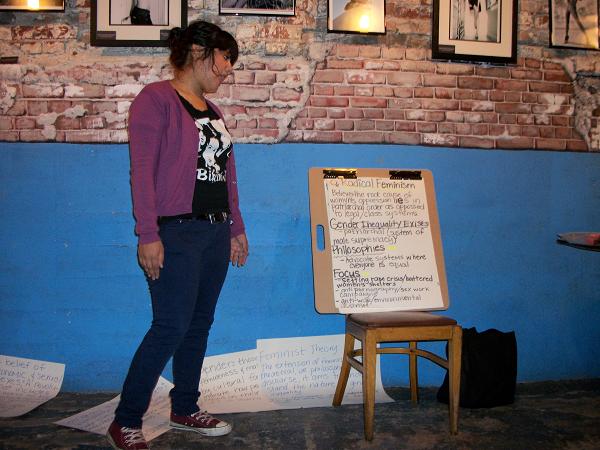
The day began with a series of talks, the first of which was given by Gloria from the Inland Empire Feminist Collective. She began with definitions of feminism, patriarchy, and gender, providing an example of patriarchy. "Feminism is the belief in the social, political, economic equality of the sexes. It is the revolutionary movement that includes those who wish the world to be equal." Or, for the less academincally-inclined, she provided the definition, "Feminists are just women who don't want to be treated like shit." She then went through the various theories of feminism: liberal feminism, Marxist feminism, socialist feminism, radical feminism, multicultural/multiracial feminism (including Black feminism and Chicana feminism, to name a few), and finally, anarcha-feminism, detailing the principal tenets and focuses of each. She then handed out a worksheet for participants to fill out, with questions such as "What is Feminism to YOU?" and "How can YOU apply feminism in your life?" While we were busy pondering the questions, a young man descended the staircase, and, oblivious to what was going on, began asking questions about some literature that was on display. We explained to him that there was a workshop going on, and that he was welcome to stay and participate as long as he showed respect for the process already in progress. When he found out that the topic of discussion was feminism, he became vociferous in his opposition to the principle. He spoke loudly and interrupted others, leading some of us to suspect that he was drunk. We asked him to leave. Once attendees had finished filling out the questionnaires, a discussion was held on each of the questions posed by the worksheet. Some of the ideas brought up included the idea that the socially-constructed gender binary was just as oppressive as men as it is of women, and that people should be free to decide on their own who to perform their own gender identity. Reproductive freedom and access to womens' health services were also brought up, while some male feminists asked for advice as to how they could avoid reinforcing patriarchy when interacting with younger relatives. One man argued that the sexes are much more similar than they are different, and asked what we thought of the idea of essentialism. Following the discussion, Gloria invited us to take some flyers for upcoming events and zines on feminism.

In between talks, I spoke with one member of Riverside Food Not Bombs! who told me about recent repressive actions against anarchists by members of the Riverside Police Department. They had shut down one of the community's preferred venues, the Pharoah's Den, and made it very difficult to reopen. They had also ticketed him for being a minor in possession of alcohol despite his not being in possession of any contraband whatsoever, and harassed other members of the collective as they attempted to do their weekly serving.

The next talk was led by Doug from Modesto Anarcho Crew, who began with an overview of the location, economy, and demographics of the Central Valley city. He continued with a description of the crew's organization and tactics. In addition to operating freeboxes, maintaining an autonomous space, and creating propaganda, they participate "in ongoing class and community struggles." "Where the fire is, we bring the gasoline," he summarized. The talk centered on what the speaker characterized as the "tension between activism and intervention." He defined "activism" as "petitioning the government or the powers that be so they can change certain things." "Intervention," "in social struggles and social tensions," on the other hand, is "trying to make those things into wider ruptures against capitalism." This tension, according to the speaker, is exemplified by the dichotomy between the "scene" that seems to exist among anarchists and the "movement" that is necessary to create a "free, non-hierarchical, autonomous society." He discussed some examples of his crew's use of "interventionist" tactics in his area, including support for a rent strike against an absentee landlord, a non-government-sanctioned needle exchange program, for which some are currently facing prosecution, and the interjection of radical strategies and ideas into the student movement. The final part of the talk centered on suggestions as to how to seek out and create allies. He talked about forming alliances with local indigenous tribes, the impoverished, and the LGBT community.

The final talk was on "anarchist infrastructure," and was given by Dana Ward from the Anarchy Archives. Before beginning, he gave an overview of the archives, and then asked us what we wanted to learn about. "I can cover everything from Godwin to the contemporary period, movements, individuals, things like that. [...] I'm a resource. Suck me as dry as you can. I'll get all the information I got in me out if I can. Just tell me what you need to know." Various requests were made: "Bonnot gang!" "Worker's cooperatives." "The origins of anarchism, especially the Paris Commune," "How to raise an anarchist army, Makhnovisti-style." "I'd like to know about the anarchist version of dual power."

He began with the Paris Commune, since the topic also touched on workers' cooperatives and expropriation. That topic led into a lengthy discussion of cooperatives, both in theory, as discussed by the anarchocommunists Kropotkin and Réclus, and in practice, such as the Spanish co-op Mondragón. A few attendees were on the edge of their seats. Others seemed bored out of their minds. Most were somewhere in between. In a brief deviation from the topic of workers' collectives, he touched on the "subculture vs. movement-building" issue. "It's not really an either/or question. [...] It's really a question of creating your scene so that you're able to sustain yourselves, where you practice mutual aid, where you engage in horizontal organization and so forth, so that when the rest of the society collapses, you already have the alternative funtioning and ready to stand in its place." He then returned to the central topic, emphasizing that when both ownership and labor are collectivized, production increases and becomes more safe and efficient, before opening up for questions.

The first questioner asked if collectivization created advancements in the way industries affect the environment, women's equality, and social justice in the same way that they increased efficiency and output. Ward responded that the Argentine example provided the best answer to this question in that when factories were occupied, "the community was brought in." The next question concerned accumulation of power in the absence of government regulation. Ward's response focused on the concept of mutual aid. The next question was about horizontality and collectivization in fields outside of economics, and Ward cited the example of the Modern School.

At this point, we faced yet another interruption by a sexist asshole. "Is this some feminist bullshit? This is gay. Gay, gay, gay," he commented aloud, while Ward was attempting to answer the question. Like the previous guy, he was asked to leave. The recurrence of these types of episodes would seem to indicate one way in which we are either failing to engage potential revolutionaries or failing to prepare for probable contingencies. However, it is probably more likely a comment on the state of our society and issues such as rampant substance abuse, even among our own peers. Further questions were on law enforcement and how to deal with predators among radical communities. (He suggested shunning.)

One of the members of Modesto Anarcho challenged that idea freedom could be had simply by collectivizing the workplace. I took his challenge to mean that liberty is too large to fit only within the economic sphere, and that co-ops do not threaten capitalism per se, but it seemed that Ward interpreted the question in terms of a post-Left critique of work itself. He suggested that such critiques of "work" were rooted in the class backgrounds of the critics. "I come from a working-class background [...] To me, there's no alternative to work!" While it was framed in such a way that it was not worded as a direct attack, I could see how it could have been interpreted as such. A member of the circle broke up the debate before it threatened to consume the basement by suggesting that the topic be discussed later in smaller groups to allow everyone to participate in the conversation at hand. This intervention was fortunate, because it broke up the lecturer-questioner dichotomy to which professors, due to their professional backgrounds, are overly accustomed, whereas the comrade from Modesto was interjecting an idea in a manner meant to challenge everyone, not just the lecturer.

Following that discussion, many small conversations were had among the participants before we reconvened to discuss where to go from there. One man suggested community organizing as a tactic for movement-building. Others proposed ways to apply Modesto's "interventionist" tactic to local issues.

While I was not present for the rest of the event, the LA Anarchist Weekly reported that the Riverside Police Department refused to allow the concert to proceed as scheduled due to a 'blasphemous' representation of Christ on the event's flyer. The flyer depicted Jesus playing an accordion.

Certificate

by Rockero Friday, Feb. 12, 2010 at 4:15 AM
rockero420@yahoo.com

Certificate...

IE Feminist Collective (part 1)

by Rockero Friday, Feb. 12, 2010 at 4:15 AM
rockero420@yahoo.com

audio: MP3 at 1.8 mebibytes

IE Feminist Collective (part 2)

by Rockero Friday, Feb. 12, 2010 at 4:15 AM
rockero420@yahoo.com

audio: MP3 at

Modesto Anarcho Crew

by Rockero Friday, Feb. 12, 2010 at 4:15 AM
rockero420@yahoo.com

audio: MP3 at 15.0 kibibytes

Dana Ward (part 1)

by Rockero Friday, Feb. 12, 2010 at 4:15 AM
rockero420@yahoo.com

audio: MP3 at

Report this post as:

add your comments


Dana Ward (part 2)
by Rockero Friday, Feb. 12, 2010 at 4:15 AM
rockero420@yahoo.com

audio: MP3 at

Blasphemy Rumor

by Justin Friday, Feb. 12, 2010 at 6:01 PM

Hey I was one of the organizers of the event. I really don't know how the blasphemy rumor got started. There were rumors that the local city government felt uncomfortable with the subject matter and use a tenuous permit situation as an excuse to keep the show from happening, but it was one of many reasons they used to notify the space they werent able to have noise until their permit cleared. I have no idea where the cops or the blasphemy got into the rumor, it's simply not true.

IE Feminist Collective (part 1)

by Rockero Saturday, Feb. 13, 2010 at 2:13 PM
rockero420@yahoo.com

audio: MP3 at 2.0 mebibytes

Not sure why the original files are cutting off. Trying again.